Radon Testing in Southeast Michigan
Radon testing gives you clearer answers when something in your home or building cannot be seen, smelled, or felt. For property owners across Metro Detroit and Southeast Michigan, this service helps turn uncertainty into practical information. Because radon cannot be seen or smelled, testing is the only reliable way to know whether a property has elevated levels.
Whether you are buying a home, selling a property, finishing a basement, or simply want a better understanding of your indoor environment, Dr. Mold MI helps you choose the right next step with clear communication and responsive service.
What radon testing is and why it matters
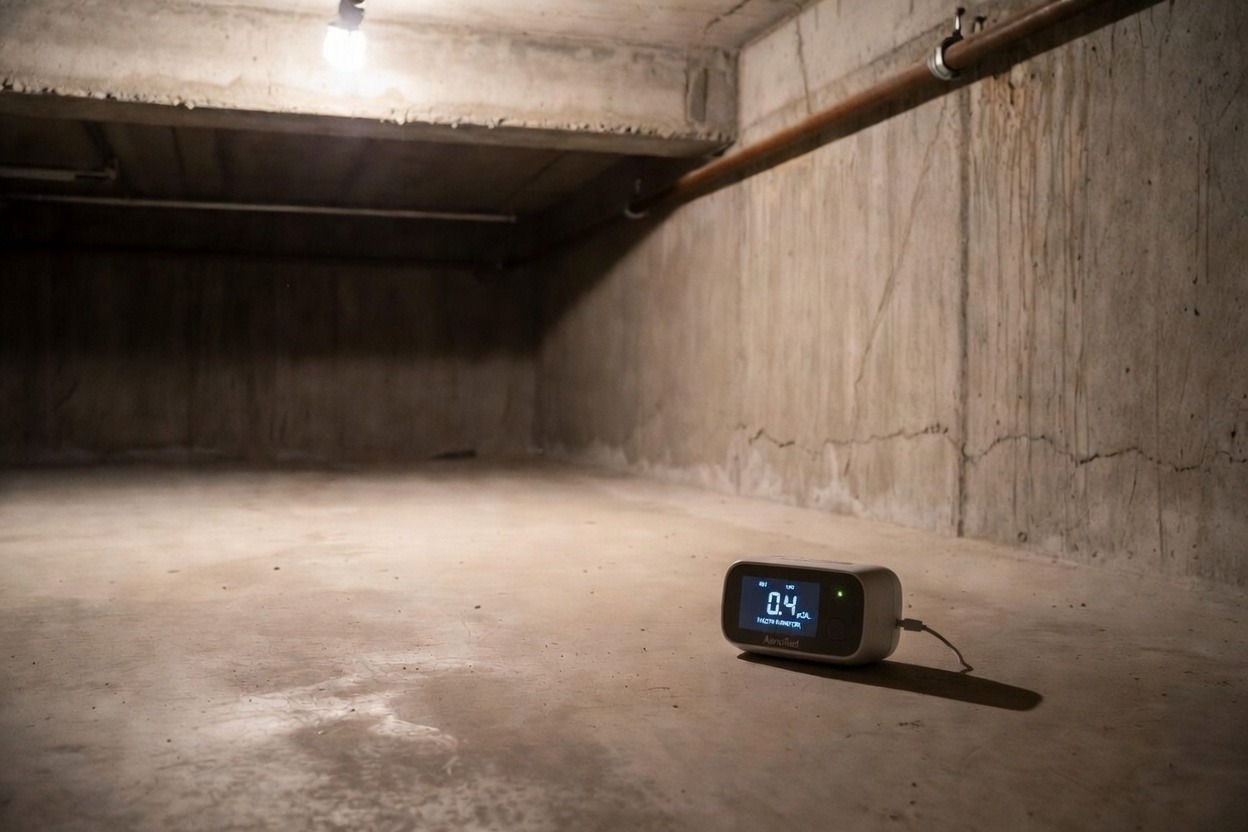
Radon testing is the process of measuring radon gas levels inside a home or building. Radon is a naturally occurring gas that forms in soil and can move into structures through foundation cracks, sump areas, crawl spaces, slab openings, utility penetrations, and other openings near the ground. Because it is invisible and odorless, the only way to know whether a property has elevated radon levels is through proper testing.
For many property owners, the challenge is not knowing whether there is a problem. A home may look clean and dry while still having elevated radon in lower levels. A finished basement may feel comfortable, but the air may still need to be checked. That is why radon testing service requests often come from people who want real information, not guesses.
Across Metro Detroit, Oakland County, Macomb County, Wayne County, and parts of Washtenaw County, radon testing is especially important because soil conditions and building characteristics can vary significantly from one property to another. Even homes on the same street can test very differently. If you want to know whether your indoor environment is safe, radon testing is the right place to start.
When someone may need radon testing
A lot of people search for radon testing near me when they are in the middle of a real estate purchase or sale. That is one of the most common reasons to schedule testing, but it is not the only one. Radon testing also makes sense when a home has never been tested before, when people spend a lot of time in a basement or lower level, when a renovation changes how a home breathes, or when previous test results are old and need to be updated.
Commercial properties, schools, offices, rental units, and mixed-use buildings can also benefit when owners or managers want better information about indoor environmental conditions. For some clients, the need is immediate because a transaction deadline is approaching. For others, it is about health, caution, and long-term planning.
In simple terms, radon testing is often most valuable when you want certainty before moving forward with a decision about the property.
Signs you may need radon testing
Radon testing is a common and important part of many real estate decisions.
If there has never been a radon test, there is no reliable way to know what the indoor level is.
Finished basements, home offices, playrooms, and bedrooms below grade make testing even more important.
Nearby homes can signal regional concern, even though each property should still be tested individually.
Changes to airflow, insulation, or lower-level spaces can affect radon conditions.
Many clients simply want a clear answer about whether their property has a hidden environmental concern.
What kinds of homes and buildings commonly need radon testing
Radon testing is useful in a wide range of properties. Single-family homes, condos, townhomes, older homes with basements, and newer homes built on slabs or with crawl spaces can all benefit from testing. Commercial properties also schedule radon testing service when property owners, managers, or occupants want clearer information about lower-level air quality.
Basements deserve particular attention because radon typically enters at or below ground level. Homes with finished basements, walkout lower levels, or frequently used basement spaces are strong candidates for testing. Rental properties, office spaces, and buildings with below-grade working areas can also warrant evaluation.
The key point is simple. Radon is not limited to one type of property. If people spend time in the space, testing can provide valuable clarity.
How the radon testing process works
A good radon testing process should feel straightforward and reassuring. You should know what is happening, why it matters, and what the next step will be once the test is complete.
Why people choose radon testing before there is an obvious problem
Radon is different from many other indoor environmental concerns because there may be no visible warning sign at all. You are not waiting for staining, odor, or damage to appear. You are testing because you want to know whether an invisible issue exists before it affects an important decision about health, safety, or property value.
That is why radon testing service is so often scheduled proactively. People want to know where they stand before buying, before selling, before finishing a basement, or before assuming that a property is fine simply because nothing feels wrong.
For many clients, that peace of mind is reason enough to schedule the test.
Why choose Dr. Mold MI for radon testing
Choosing the right radon testing company means working with a team that respects the importance of the results and communicates clearly. At Dr. Mold MI, we focus on making the process easy to understand so homeowners, business owners, buyers, sellers, and property managers can move forward with confidence.
If you want to know more about our company, visit About Us, read our Reviews, browse the Frequently Asked Questions, or go directly to Contact Us.
Related services that may also help
A useful service when moisture or mold conditions are also part of the property concern.
A broader starting point for clients comparing indoor environmental testing options.
Helpful when the concern involves indoor air comfort, stale air, or broader environmental questions.
This page covers our professional radon testing service for homes and buildings across Southeast Michigan.
Important when lower-level conditions, dampness, or unresolved wet materials are affecting the property.
May be part of a broader odor-focused service plan when multiple environmental concerns are present.
Helpful in crawl space and lower-level moisture strategies that support healthier building conditions.
Serving Metro Detroit and Southeast Michigan
Radon testing is a regional need across Metro Detroit and Southeast Michigan because homes and buildings throughout the area can have very different radon levels depending on soil conditions, foundation type, ventilation, and how the lower level is used. Dr. Mold MI serves properties across Oakland County, Macomb County, Wayne County, and Washtenaw County with customer-focused testing that is designed to give you clear, usable information.
We also serve communities throughout the region, including Royal Oak, Birmingham, Troy, Novi, Livonia, Ann Arbor, Northville, Southfield, West Bloomfield, and Sterling Heights.
If you are elsewhere in the broader service area and want to know whether radon testing is the right next step, our team can help you figure that out quickly.
Frequently asked questions about radon testing
Need clear answers about radon in your property?
Radon testing helps you move from uncertainty to clarity. If you want reliable results, straightforward communication, and service from a trusted local team, Dr. Mold MI is ready to help.
Request service or send us a message
Use the form below to request an estimate, ask a question, or tell us more about your mold, water damage, inspection, or testing needs in Metro Detroit.
Need help now?
Call Dr. Mold for responsive help with mold remediation, water damage restoration, inspections, testing, and related service questions.
Call Now