Basement Mold Removal in Metro Detroit
Basements are where most mold problems start in Southeast Michigan homes. They sit below grade, stay cool and damp, and take on water from seepage, sump pump failures, plumbing leaks and storm or sewer backups. Finished basements make it worse, because drywall, carpet and paneling hide moisture until the smell gives it away.
Dr. Mold provides basement mold removal for homeowners, landlords, buyers and sellers across Oakland, Macomb and Wayne County. We remove the mold, address the water that caused it, and help you get the space back to normal.
Quick answer: Basement mold removal includes finding the moisture source, setting up containment, removing moldy porous materials such as drywall, carpet, pad, paneling and insulation, HEPA vacuuming and cleaning the remaining surfaces, treating them to help prevent regrowth, and fixing the water problem with options like waterproofing, drainage or humidity control.
Calls answered 24 hours a day, 7 days a week.
What Causes Basement Mold?
Water pressure against foundation walls pushes moisture through cracks and joints, especially after heavy rain and snowmelt.
Storm and sewer water soak into finished materials, and contaminated water means porous items usually have to go.
A failed, undersized or unplugged sump pump can leave water standing in the basement.
Water heaters, washers, supply lines and drains leak slowly behind walls.
Summer humidity condenses on cold foundation walls, pipes and ductwork.
Drywall, carpet pad and paneling installed against foundation walls trap moisture and feed mold.
For a deeper look at why Michigan basements get wet, read what causes mold in Michigan basements.
Signs You Need Basement Mold Removal
- A musty smell that keeps coming back, even after cleaning
- Dark spots or fuzzy growth on drywall, paneling, baseboards or stored items
- Stains or tide lines low on the walls
- Carpet that smells damp or feels wet underfoot
- Peeling paint or white mineral deposits on foundation walls
- Mold after a flood, sewer backup or sump pump failure
Our guide to mold in basements covers the warning signs in more detail.
Our Basement Mold Removal Process
- Inspection and moisture mapping. We find where the moisture is coming from and how far the growth has spread, including behind finished walls.
- Containment. The work area is sealed off and kept under control so spores and dust do not move into the rest of the house.
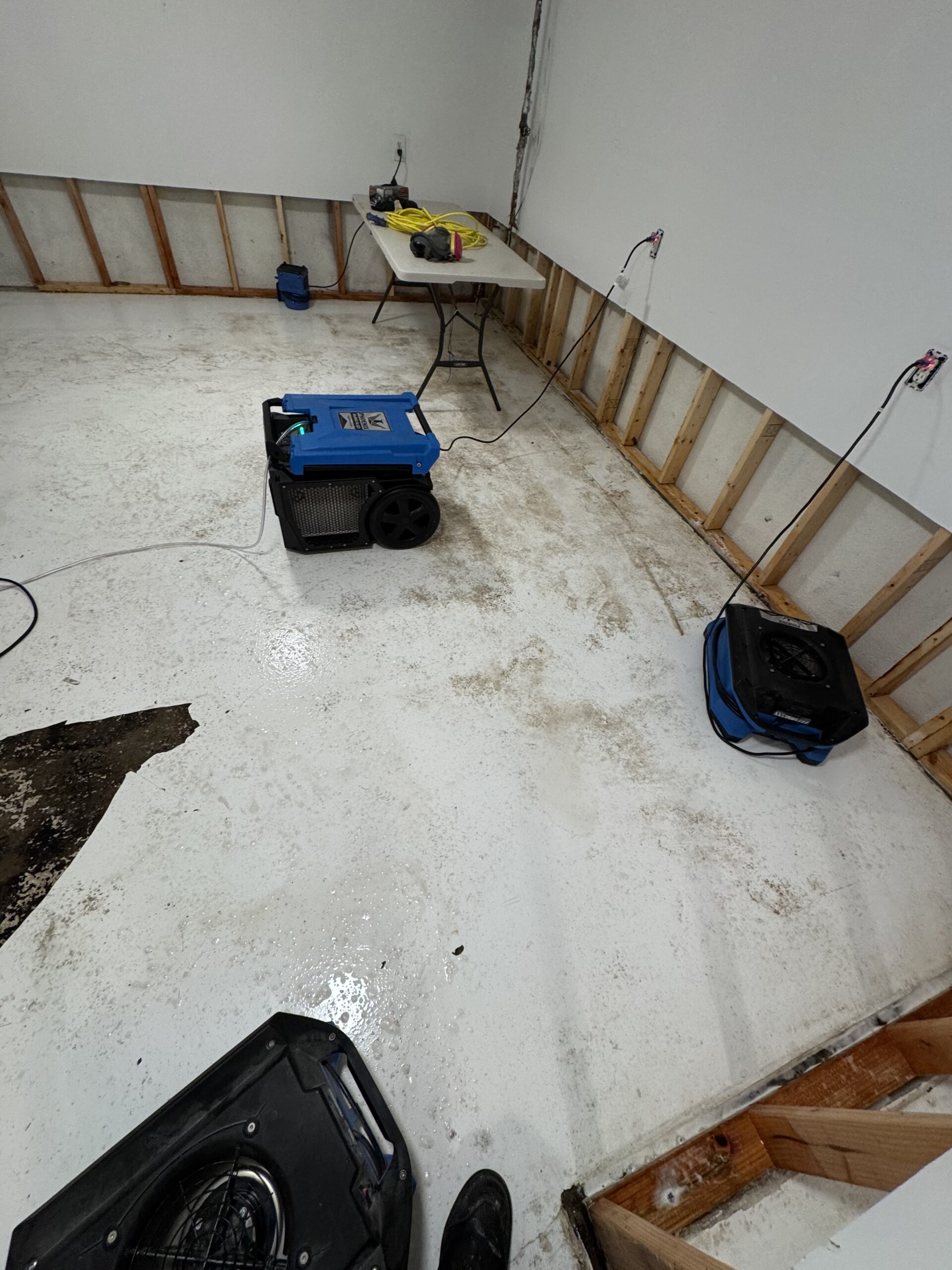
- Remove moldy materials. Drywall, carpet and pad, paneling, insulation and damaged stored items are bagged and removed. After sewer backups, porous materials that touched the water usually need to go.
- HEPA vacuuming and cleaning. Framing, concrete and other hard surfaces are HEPA vacuumed and cleaned.
- Treatment and drying. Cleaned surfaces are treated to help prevent regrowth, and the space is dried.
- Fix the water problem. We recommend the right fix, such as basement waterproofing, drainage changes or humidity control, so the mold does not come back.
- Confirm the result. Post remediation verification is available when you want documentation before rebuilding.
Can I Clean Basement Mold Myself?
Small spots on concrete or another hard surface can sometimes be cleaned once the moisture source is fixed. But growth on drywall, carpet, insulation or wood, mold over a larger area, or mold after a flood or sewer backup is a job for a professional. Scrubbing or tearing out moldy materials without containment can spread spores through the house, and bleach does not fix the moisture that caused it.
If the growth is dark and spreading, see our black mold removal page.
Basement Mold After Flooding or a Sewer Backup
Metro Detroit has had several major basement flooding events, and many homes have taken on storm or sewer water more than once. After water comes in, mold can start on wet materials within 24 to 48 hours. Fast emergency water removal and drying make a big difference in how much material has to come out later.
Already past that window? Basement mold removal handles the cleanup, and water damage restoration covers the rest of the recovery.
What Affects the Cost of Basement Mold Removal?
Basement mold removal is priced after an inspection. The main factors are how much area is affected, whether the basement is finished, how much drywall, carpet and other material has to come out, whether the water involved was clean or contaminated, and what waterproofing or drainage work is needed. Read our guide to mold remediation cost in Michigan, check whether insurance may help, or ask about financing.
Basement Mold Removal Near You
We provide basement mold removal throughout Oakland, Macomb and Wayne County, including:
See all service areas.
Basement Mold Removal FAQs
How do you remove mold from a basement?
Find and stop the moisture, contain the area, remove moldy porous materials, HEPA vacuum and clean hard surfaces, treat them, dry the space, and fix the water problem so it does not return.
Do I have to tear out drywall to remove basement mold?
Usually, yes, for the affected sections. Mold grows on the paper facing and inside the wall cavity, so moldy drywall is cut out during the cleanup rather than cleaned in place.
Is basement mold covered by insurance?
It depends on your policy and what caused the water. Sudden, covered water events may help with cleanup costs, while long-term seepage usually is not covered. Check your policy and talk with your agent.
Will basement mold come back?
It can if the water problem is not fixed. Waterproofing, drainage improvements and humidity control are what keep it from returning.
Do you answer calls after hours?
Yes. Dr. Mold answers calls 24 hours a day, 7 days a week at (248) 697-2200.
Need Basement Mold Removal?
If your basement smells musty, shows mold on the walls, or took on water, Dr. Mold can help you find the cause and get it fixed.
Get a Quote Call (248) 697-2200Calls answered 24 hours a day, 7 days a week.
Request service or send us a message
Use the form below to request an estimate, ask a question, or tell us more about your mold, water damage, inspection, or testing needs in Metro Detroit.
Need help now?
Call Dr. Mold for responsive help with mold remediation, water damage restoration, inspections, testing, and related service questions.
Call Now